
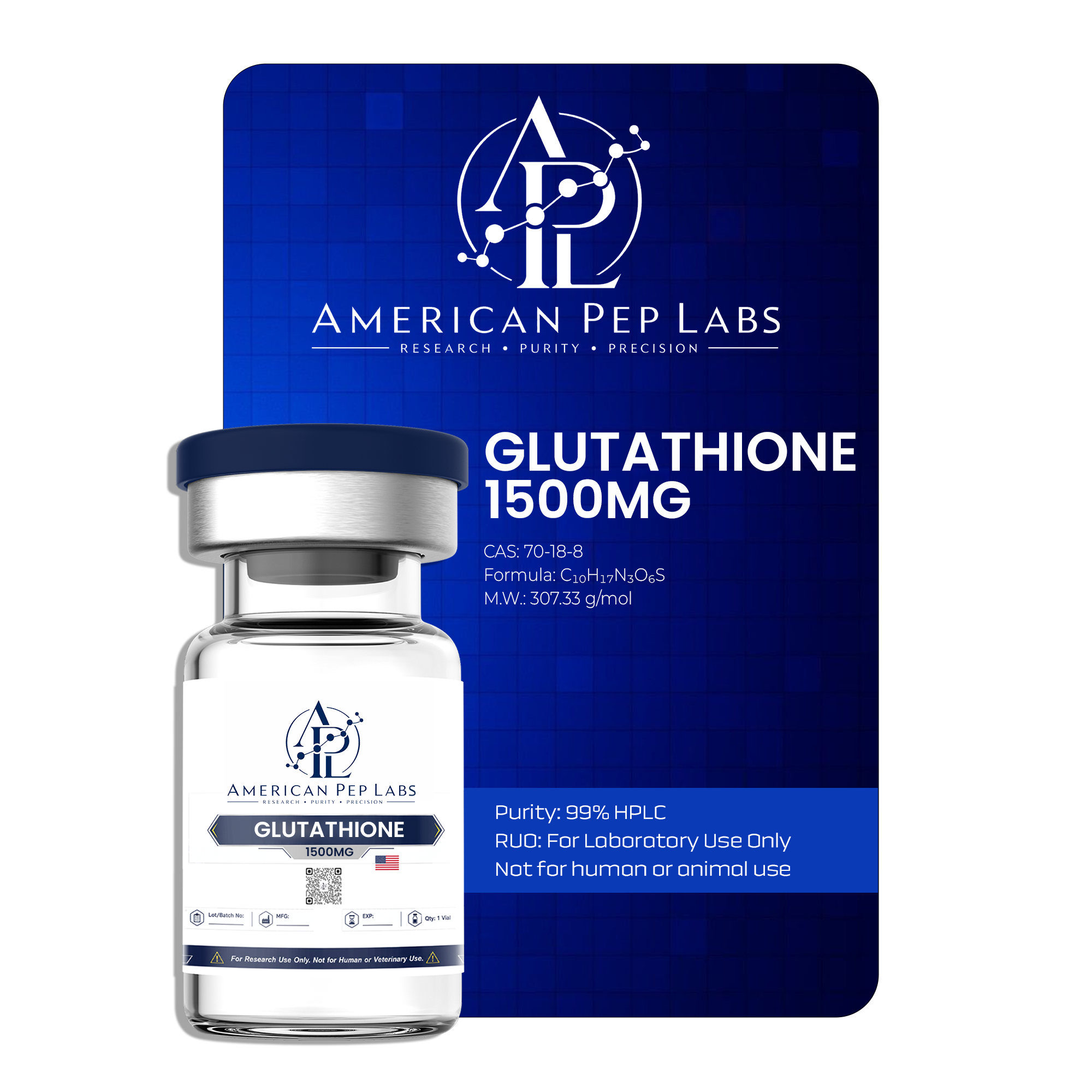
Glutathione is a naturally occurring tripeptide composed of glutamic acid, cysteine, and glycine. Unlike conventional peptide bonds, the glutamate residue is connected to cysteine through its side-chain γ-carboxyl group, giving glutathione a structurally distinctive peptide linkage.
Reduced glutathione, commonly abbreviated as GSH, is supplied for controlled laboratory, biochemical, and analytical research. Its defined chemical structure makes it suitable for studies involving thiol chemistry, redox-associated biochemical systems, molecular interactions, analytical characterization, and comparative compound research.
PubChem identifies reduced glutathione with CAS 70-18-8, molecular formula C₁₀H₁₇N₃O₆S, and molecular weight approximately 307.33 g/mol.
Research Applications
Glutathione may be examined in controlled non-clinical research involving:
- Tripeptide characterization
- Thiol chemistry research
- Redox-associated biochemical studies
- Enzyme interaction research
- Molecular binding analysis
- Analytical chemistry
- Stability assessment
- Non-clinical biochemical and cellular models
Any experimental observations should remain limited to the applicable research system and should not be interpreted as evidence of therapeutic, cosmetic, detoxification, antioxidant-treatment, or clinical effectiveness.
Structural Information
Reduced glutathione consists of:
γ-Glutamyl-Cysteinyl-Glycine
Abbreviated representation:
γ-Glu-Cys-Gly
A defining structural feature is the γ-peptide linkage between the glutamate side-chain carboxyl group and the amino group of cysteine.
The cysteine residue also contains a free thiol group, which forms part of the compound’s chemical identity.
Analytical Identification
Relevant analytical characterization may include:
- Compound identity confirmation
- Molecular mass assessment
- Reduced-form verification
- Thiol-content analysis
- Chromatographic purity testing
- Structural characterization
- Lot-specific quality testing
Care should be taken to distinguish reduced glutathione from oxidized glutathione and other glutathione derivatives.
Specifications & Documentation
Lot-specific documentation should be reviewed for:
- Compound identity
- Reduced or oxidized state
- Molecular formula
- Molecular weight
- Purity specification
- Analytical testing
- Lot or batch information
- Certificate of Analysis
- Storage requirements
Authenticated product-specific documentation should take precedence over generalized reference values.
Storage & Handling
Store according to the conditions stated on the product label and Certificate of Analysis. Protect the material from environmental conditions that could compromise chemical stability or oxidation state.
Handling should follow established laboratory procedures appropriate for research materials.
Research Use Only
Glutathione is supplied exclusively for laboratory research, analytical testing, and scientific reference purposes.
Disclaimer
For research use only. Not for human or veterinary use. Not intended for consumption, administration, cosmetic use, detoxification use, diagnosis, treatment, mitigation, cure, or prevention of any disease. No therapeutic, antioxidant-treatment, cosmetic, medical, or clinical claims are made or implied. Product information is supplied solely for scientific identification, documentation, and research reference.